
Key Takeaways
- Pool deck coatings, namely polyaspartic coatings, are worth the investment because they hold up to water, chlorine, sun exposure, and heavy foot traffic far better than bare concrete, epoxy, or pool deck paint.
- A professionally coated pool deck is safer and easier to maintain, with built-in slip resistance, cooler surface temperatures, and a sealed surface that resists stains and wear.
- While coatings can’t stop concrete from moving, proper crack repair, honest expectations, and professional installation make polyaspartic coatings a long-lasting, cost-effective way to extend the life of an existing concrete pool deck. They look great too!
The Question Pool Owners Ask Us Every Season
If you own a pool, you already know the deck takes more abuse than almost any other surface around your home. Water nonstop. Chlorine and other pool chemicals linger. Add in hot summer sun, sudden storms, and winter freeze and thaw cycles, and it’s no surprise so many concrete pool decks start looking rough after some years.
We get the question all the time: Are pool deck coatings worth the investment? Based on what we’ve seen in the field, the short answer is yes, when it’s done the right way and with the right expectations.
Below is a clear, real-world breakdown from our perspective at Everlast Concrete Coatings.
What Makes Pool Decks So Tough on Concrete
A pool deck is constantly exposed to conditions that concrete struggles to handle.
Standing water soaks into the surface. Pool chemicals settle in and dry. Direct sunlight heats the concrete for hours at a time. On hot summer days, surface temperatures climb fast, especially on darker or uncoated concrete. In the winter, it gets hammered by cold, freeze, snow, and ice.
Concrete also expands and contracts as temperatures swing with the changing seasons. Over time, that movement creates stress in the slab, especially on older concrete pool decks or slabs poured without frost protection. All of this makes bare concrete in a pool area a susceptible to cracking, pitting, and flaking. It’s just a question of when.
Do Polyaspartic Pool Deck Coatings Perform Well Around Pools?
Yes. This is exactly the type of environment polyaspartic pool deck coatings are built for.
We use polyaspartic concrete coatings because they bond tightly to the concrete surface and hold up extremely well in wet conditions, and under exposure to chemicals and freezing.
Pool deck surfaces go through constant wet–dry cycles, and polyaspartic coatings handle that without softening, peeling, or breaking down. Compared to epoxy coatings, sealants, or basic pool deck paint, polyaspartic deck coatings offer better flexibility, stronger adhesion, and far better UV resistance.
What about epoxy?
Epoxy coatings were originally designed for indoor use, where temperatures stay stable and sunlight isn’t a factor. Around a pool, epoxy tends to struggle. Direct sunlight can cause epoxy coatings to yellow, harden, and lose flexibility. Over time, that brittleness makes epoxy more likely to crack, peel, or wear prematurely.
Polyaspartic coatings are the modern version and behave differently. They remain flexible as temperatures rise and fall, hold their color under constant sun exposure, and maintain a tight bond to the concrete surface. That flexibility and UV stability are the reasons we rely on polyaspartic coatings for pool decks instead of epoxy.
I’ve never had any callbacks for chlorine damage or chemical issues — it can take quite a beating.”
— Matt, Everlast Concrete Coatings
How Pool Chemicals and Chlorine Affect Coated Pool Decks
One of the biggest concerns pool owners have is chemical resistance, especially chlorine.
Chlorine has not been a problem for our professional pool deck coatings. We haven’t seen callbacks related to chlorine damage, softening, or surface failure. Polyaspartic coatings are chemical resistant and built to withstand constant exposure to pool chemicals and other cleaning products used in the pool area.
This is a major reason many pool owners move away from acrylic coatings or cheaper pool deck paint systems. Those options can wear down, discolor, and require frequent reapplication. A high-quality polyaspartic concrete pool deck coating holds up far longer.
The One Issue We’re Always Upfront About: Cracks and Concrete Movement
If an existing concrete pool deck has cracks, we repair them before coating. We grind them open, clean them out, and fill them properly. This process improves the surface and creates a much cleaner finished look that will last.
However, concrete is still concrete. If the slab moves due to frost heaving, ground movement, or temperature shifts, those cracks can reappear. The coating doesn’t cause the cracking, the movement underneath does. Pool decks are especially prone to this because many are slab-on-grade without deep frost protection.
We always explain this up front so pool owners can make an informed decision. A coating protects the surface, but it can’t stop structural movement below the slab.
Slip Resistance Is a Top Priority Around Pools
Safety matters just as much as appearance around a swimming pool.
A smooth, untextured coating would become slick when wet, especially for bare feet. That’s why slip resistance is built into our pool deck coatings.
Our process includes:
- Mixing slip-resistant additives directly into the topcoat
- Broadcasting additional texture across the surface
On top of that, the right coating can also help keep your pool deck cool by reflecting sunlight!
It’s a balance between traction and comfort, and it’s one of the most important parts of a quality pool deck coating.
Maintenance and Long-Term Value of Pool Deck Coatings
A coated pool deck is far easier to maintain than bare concrete.
Instead of scrubbing stains out of porous concrete, most debris can be blown off with a leaf blower or rinsed away. The sealed surface resists staining, surface damage, and water penetration, which helps the deck stay cleaner and look better longer.
From a cost-effective standpoint, pool deck resurfacing with a durable coating often prevents costly repairs later. Rather than tearing out concrete or constantly repainting, a well-installed coating extends the life of the existing concrete surface.
So… Are Pool Deck Coatings Worth the Investment?
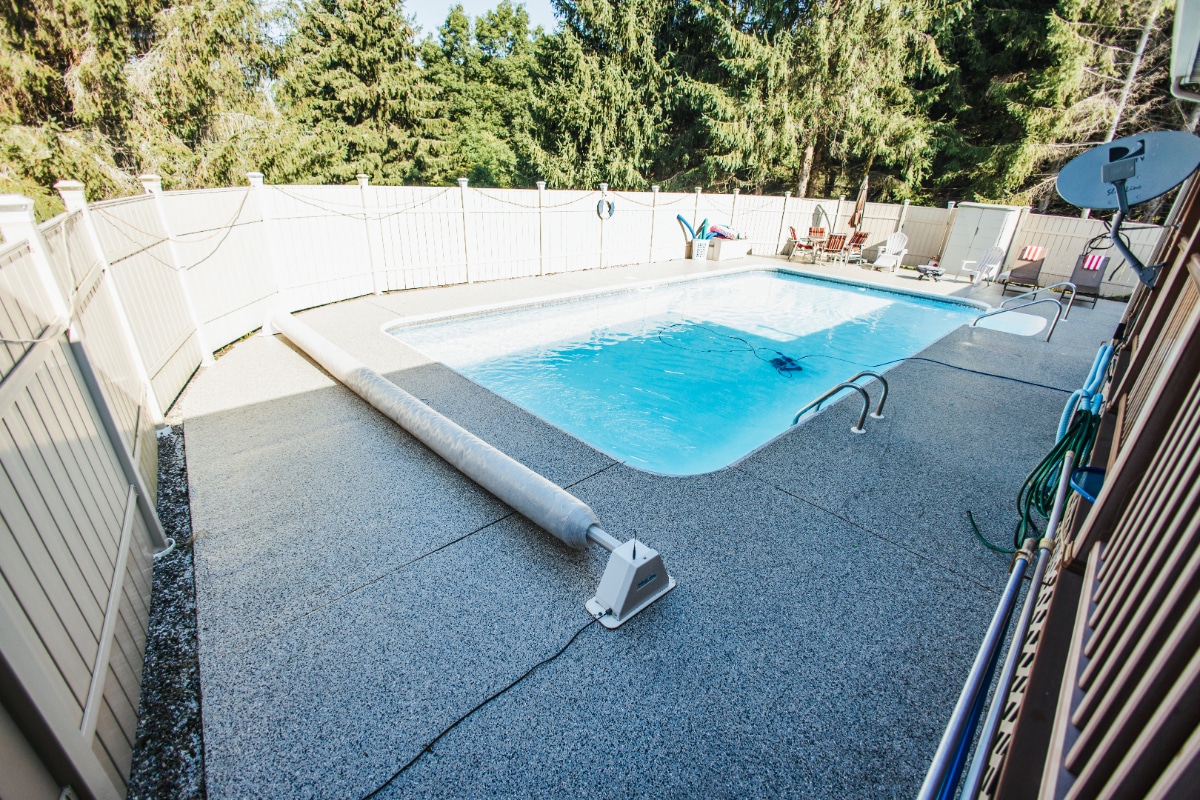
For many pool owners, yes. A professional installed polyaspartic coating is the best pool deck coating, hands down.
A professionally coated pool deck:
- Handles water, chlorine, and other pool chemicals
- Stays safer with built-in slip resistance
- Looks cleaner and more attractive
- Holds up to heavy foot traffic and weather
- Extends the life of the concrete pool deck
The key is choosing the right coating, working with professional contractors, and understanding what coatings can and can’t do.
Why Pool Owners Choose Everlast Concrete Coatings
We focus on proper installation, good communication, and materials that perform well in real pool environments. From surface preparation to texture and finish selection, every step is handled with long-term performance and the look of your pool area in mind.
Our goal isn’t just a beautiful pool deck, it’s a high-quality pool deck that stays functional, safe, and attractive year after year.
Thinking About Pool Deck Coatings Near You?
If you’re searching for pool deck coatings near me or wondering whether pool deck resurfacing makes sense for your outdoor space, we’re happy to help. Reach out for a free quote and let’s talk through your pool deck, your goals, and whether a polyaspartic coating is the smart choice for your pool area.