Key Takeaways
- Epoxy vs polyaspartic looks like an easy price comparison, but the real cost of garage floor coatings emerges only over time.
- Cheap epoxy coatings can look fine for a minute, then peel, yellow, stain, and need redo work on your garage floor.
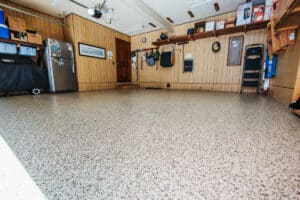
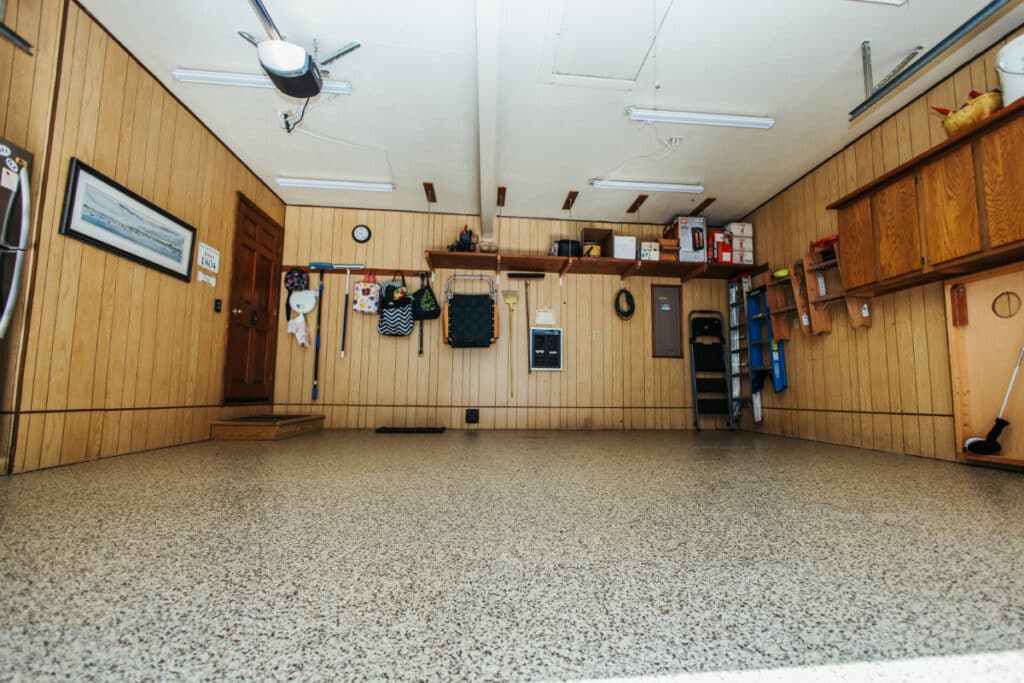
- Our professional polyaspartic coatings may cost more upfront, but they give your garage floor better durability, better chemical resistance, better UV resistance, and a much longer lifespan. It can genuinely be less cost over its lifetime!
Epoxy vs Polyaspartic Cost: What Are You Actually Paying?
When homeowners compare epoxy vs polyaspartic, the first thing they see is the price tag.
A DIY epoxy floor coating from a big box store may cost $150 to $500 for a standard garage floor. Our professionally installed polyaspartic coatings for a 2-car garage floor usually fall around $2,400 to $3,500 or more, depending on the size of the space, the condition of the concrete floor, and how much repair work is needed.
So yes, epoxy vs polyaspartic looks lopsided at first.
One coating sounds cheap, the other coating sounds expensive, but garage floor coatings are one of those purchases where the upfront number only tells part of the story.
The better question is this: what are you getting for that cost, and how long will that garage floor coating last before you are back at square one?
Why Epoxy Looks Like the Cheap Option
We understand why epoxy is tempting.
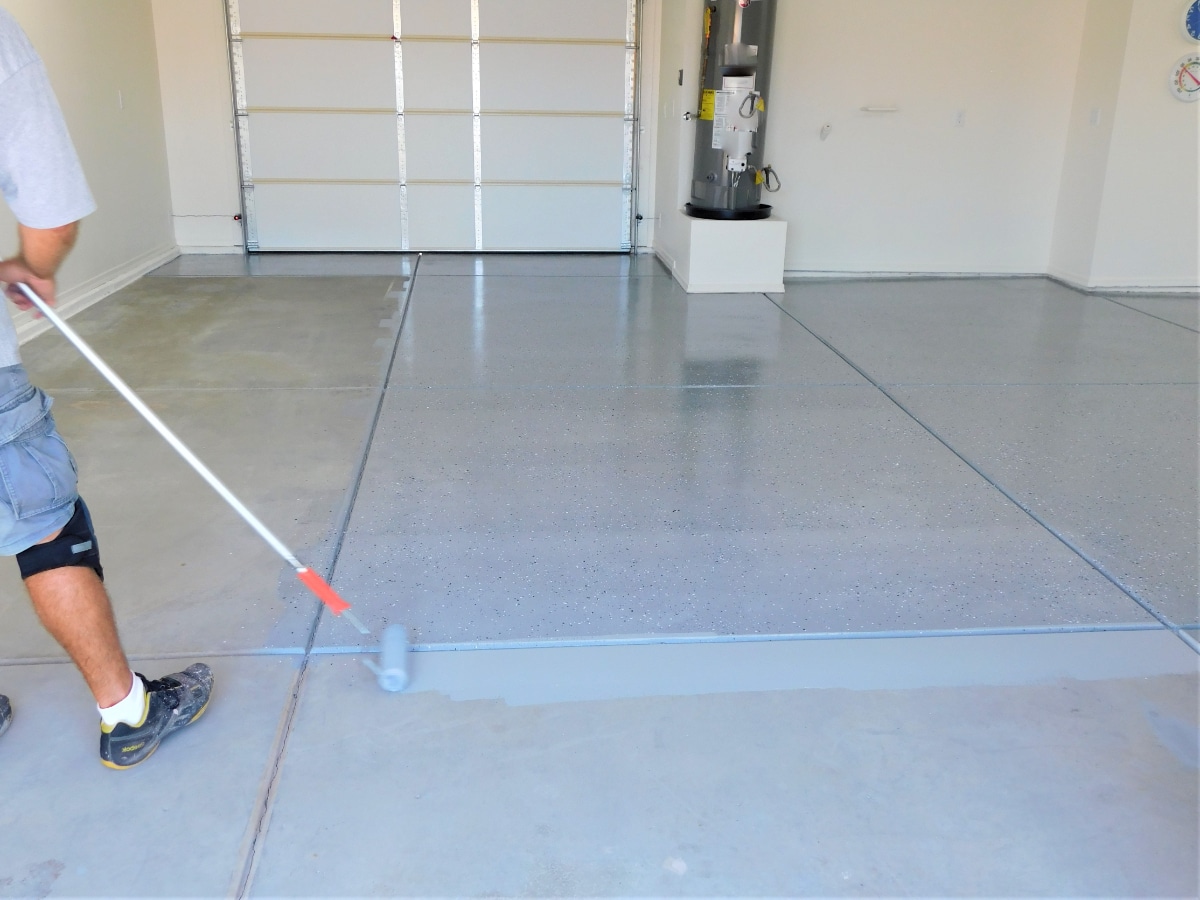
Epoxy is sitting right there at the big box store. The box promises a glossy floor, a cleaner garage, and a satisfying weekend flooring project. A typical epoxy resin kit looks simple enough: mix the resin and hardener, roll out the coating, and enjoy your new epoxy floor.
That easy picture is exactly why epoxy floor coatings sell so well.
And to be fair, epoxy coatings can be suitable in some short-term situations. If someone wants the lowest upfront cost possible and is willing to accept the tradeoffs, epoxy may feel like the best choice for now.
But epoxy vs polyaspartic is not really a contest between two equal coating materials. It is a comparison between a short-term coating and a longer-term system built for an active garage floor or basement floor.
What Goes Into Concrete Floor Coatings
This is where the epoxy vs polyaspartic conversations start to get more honest.
All floor coatings depend on surface preparation. Before any epoxy floor coatings or polyaspartic coatings are installed, the concrete surface has to be clean, dry enough, and properly opened up so the coating can form a stronger bond. Dust, oils, old stains, and debris all get in the way.
For us, this means grinding the concrete floor, not just giving it a quick wash and hoping for the best. Many cheap epoxies rely on acid etching, but that is not the same as truly preparing concrete surfaces for long-term adhesion.
Both epoxy coatings and polyaspartic coatings are two-part materials. You are mixing resin with a hardener. Once that process starts, the “pot life” is limited, the installation window is tights, and the quality of the preparation matters a lot.
That is one reason a professional garage floor coating costs more. A better job starts before the top coat ever touches the floor.
The Biggest Mistake With DIY Epoxy Floor Coatings
If we had to name the biggest mistake in DIY epoxy floor coatings, it would be underestimating the concrete.
Concrete is not dead, still stone. A concrete slab holds moisture, moves with weather, and reacts to temperature changes. If moisture is trapped below a rigid epoxy floor, that epoxy coating can start bubbling, peeling, or delaminating. That is especially true in garages, basements, and any space exposed to seasonal swings.
We have looked at more than a few epoxy floor coatings that seemed fine right after installation and then started coming apart later.
Usually it is not one dramatic mistake, it’s a stack of smaller issues: not enough prep, moisture in the concrete, poor mixing, bad timing, or cheap epoxies that just were not made for a demanding garage floor.
Cure Time and Garage Downtime
Another big part of epoxy vs polyaspartic cost is the amount of time your garage is out of service.
Epoxy coatings usually need about 24 hours before light foot traffic, and full use of the garage floor can take several more days depending on the epoxy, humidity, and temperature. That means more downtime, more stuff moved around, and a longer disruption to your garage space.
Polyaspartic coatings are different. Polyaspartic cures fast. In many cases, polyaspartic coatings can handle light foot traffic in about 12 hours, and vehicle traffic can often return in 24 to 96 hours. That rapid curing time is a real advantage for busy homeowners.
Polyaspartic coatings also work in a wider range of temperatures than epoxy coatings, which helps with installation scheduling and year-round flexibility.
Durability: Where Epoxy vs Polyaspartic Really Separates
Epoxy is rigid. Polyaspartic coatings have a little more give. That’s important because every garage floor and every concrete floor moves. A concrete slab expands and contracts with heat, cold, and temperature changes. When a rigid epoxy coating tries to sit on top of moving concrete, cracks and delamination become much more likely.
Polyaspartic coatings are more flexible, more durable, and highly resistant to wear in high traffic areas. In industrial settings, industrial environments, commercial space projects, and residential garage floor installations, that extra durability matters.
A garage floor coating that can move with the concrete is usually the best solution. A rigid epoxy floor may look good at first, but it is often more vulnerable over time.
UV Stability, UV Resistance, and Sunlight
Sunlight is brutal on the wrong floor coatings.
Standard epoxy coatings are vulnerable to UV degradation. With enough UV exposure, an epoxy floor can yellow, fade, and lose color stability. Garage doors opening every day, sunlight through side windows, and other exposed conditions all speed that up.
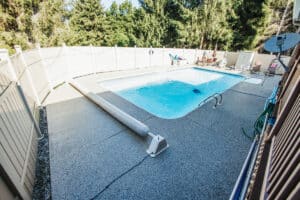
Polyaspartic coatings are UV stable. They offer much better UV resistance, much better UV stability, and much better appearance over time. That makes polyaspartic coatings a strong fit for garage floor coatings, pool decks, basements with daylight, and any outdoor space where a coating may be exposed to sun.
If your garage floor gets sunlight, epoxy vs polyaspartic should not be judged on price alone.
Chemical Resistance, Stains, and Daily Messes
A garage floor takes abuse.
Between road salt, oil, cleaners, chemicals, stains, and even brake fluid, your floor coating has to do more than just look nice. Polyaspartic coatings provide better chemical resistance and a less porous surface, so stains and spills are easier to clean. They are highly resistant to many of the things that beat up garage floor coatings over time.
Epoxy coatings can offer decent protection, especially high quality epoxy products, but polyaspartic coatings generally provide better chemical resistance, better stain resistance, and better durability in high traffic areas with regular vehicle traffic.
That’s important in a residential garage floor, but it also matters in a commercial space, a she shed, basements, and other hard-working spaces.
Moisture, Concrete, and Why Floors Fail
Moisture is one of the biggest reasons epoxy floor coatings fail.
When moisture rises through the concrete and gets trapped under a rigid coating, the surface can lift. Once that starts, an epoxy floor often keeps failing in patches. A garage floor that looked sharp six months ago can start looking rough fast.
Our system uses polyurea coatings as a base coat with a polyaspartic top coat. That combination gives the floor coating a stronger bond to the concrete floor, better flexibility, and better long-term performance on real concrete surfaces.
When we compare epoxy vs polyaspartic, this is one of the biggest benefits people miss.
How Long Does an Epoxy Floor Last vs Polyaspartic Coatings?
A DIY epoxy floor may last 1 to 3 years on a garage floor before the quality drops off or visible issues start showing up. Some epoxy coatings last longer, especially in lighter-use spaces, but many cheap epoxies and low-end epoxy floor coatings need attention much sooner.
A professionally installed polyaspartic coating can last 10 to 15 years or more.
That’s a massive difference in durability.
It’s also why epoxy vs polyaspartic is really a value conversation, not just a cost conversation.
The Real Cost Over Time
Here is the part most people skip.
If you coat your garage floor with epoxy, redo that epoxy floor a few years later, and then repeat the process again, you’re spending more on materials, more on your time, and more on frustration. Every new epoxy flooring project brings another round of prep, another round of waiting, and another chance for something to go sideways.
With polyaspartic coatings, the story is usually much simpler. The coating is installed, it cures fast, it’s durable, and you get back to using your garage.
That is why epoxy vs polyaspartic often looks one way on day one and a completely different way five years later.
When Epoxy Might Still Make Sense
We’re not going to pretend epoxy never has a place.
If someone has a tight budget, a very small space, or a short-term goal, epoxy may be suitable. For a quick cosmetic change, epoxy coatings can make sense.
But if the goal is a lasting garage floor coating with better quality, better benefits, and fewer headaches, polyaspartic coatings are usually the best choice.
Why We Prefer Polyaspartic Garage Floor Coatings
From our perspective at Everlast, epoxy vs polyaspartic is not a hard call.
We’ve seen what happens when epoxy coatings meet moisture, sunlight, hot tires, and real-life garage mess. We have also seen what polyaspartic coatings do in those same conditions.
For garage floor coatings, basements, pool decks, and other floor coatings where quality and durability matter, we believe polyaspartic coatings are the ideal choice. They are more durable, more suitable for changing conditions, and better equipped for the kind of use most homeowners expect from a garage floor.
If you want the cheapest coating today, epoxy wins.
If you want the best choice over time, polyaspartic wins by a mile.
Get a Free Quote for Your Garage Floor
If you’re comparing epoxy vs polyaspartic and want a straight answer about your own space, talk to us.
At Everlast Concrete Coatings, we install garage floor coatings and basement floor coatings that are built for real concrete, real garages, and real life. Reach out for a free quote, and we will help you choose the best solution for your garage floor, basements, or other concrete floor coating project.